
In San Bernardino County, accepting Housing Choice Vouchers—commonly known as Section 8—involves a structured partnership between property owners and the Housing Authority of the County of San Bernardino (HACSB). Under California law, landlords cannot deny applicants simply because they use rental assistance, making it essential for property managers and owners across Ontario, Rancho Cucamonga, Fontana, and San Bernardino to understand the administrative process. By mastering the steps required for tenancy approval, rent determinations, and property inspections, property owners can capitalize on steady, government-backed payments while maintaining rigorous operational standards.
California Fair Housing and SB 329 Compliance
Since January 1, 2020, California Senate Bill 329 has defined Housing Choice Vouchers as a legal source of income under the California Fair Employment and Housing Act (FEHA). This statute prohibits landlords from advertising 'No Section 8' or blanketly refusing applicants based on their voucher status. Property owners must evaluate voucher holders using the exact same screening criteria applied to non-assisted applicants, such as credit history, rental references, and background checks.
However, when evaluating financial criteria, landlords must adjust how they calculate income ratios. Instead of requiring the applicant to earn two or three times the total monthly contract rent, California law dictates that any minimum income requirement can only be applied to the tenant's individual out-of-pocket portion of the rent. For instance, if a home in Upland rents for $2,800 per month, and HACSB covers $2,200 via a monthly subsidy, the tenant is responsible for $600. If your screening policy requires a 3x rent-to-income ratio, the applicant must demonstrate a verifiable monthly income of at least $1,800 ($600 multiplied by 3), rather than $8,400 ($2,800 multiplied by 3).
The HACSB Tenancy Approval Process Step-by-Step
Navigating a voucher tenancy in San Bernardino County requires completing a standardized administrative sequence. While the paperwork might initially seem detailed, following these steps ensures a predictable onboarding timeline:
- Tenant Selection & Screening: The applicant submits their rental application alongside their Housing Choice Voucher provided by HACSB. The landlord conducts standard background and credit screening.
- Submitting the RTA Packet: Once an applicant is approved, the landlord and tenant complete the Request for Tenancy Approval (RTA or RFTA) packet provided by the housing authority. This document details the lease terms, proposed monthly rent, included utilities, and property specifications.
- Rent Reasonableness Evaluation: HACSB reviews the proposed rent against market rates for unassisted, comparable rental units in the immediate ZIP code, evaluating parameters like square footage, property age, amenities, and maintenance condition.
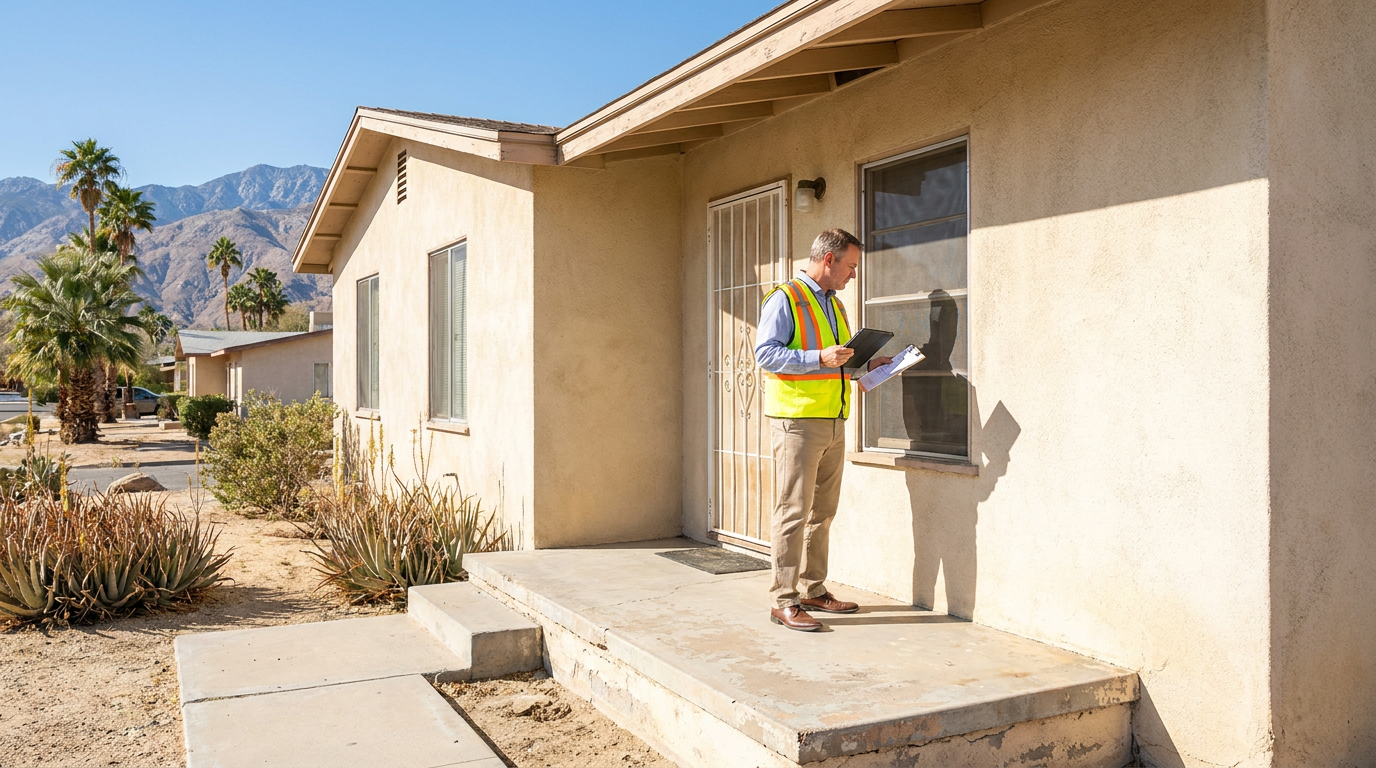
- Housing Quality Standards (HQS) Inspection: An inspector certified by HACSB schedules an on-site evaluation to confirm the dwelling meets basic health, safety, and structural requirements prior to occupancy.
- Lease Execution & HAP Contract Signing: Following a successful inspection and rent agreement, the landlord executes a standard residential lease with the tenant and signs a Housing Assistance Payment (HAP) contract directly with HACSB.
HACSB Payment Standards and Utility Allowances
HACSB establishes annual Payment Standards based on HUD Fair Market Rents (FMR) and Small Area Fair Market Rents (SAFMR), which break down allowable subsidies by specific ZIP codes. Higher-cost submarkets such as Chino, Chino Hills, and Rancho Cucamonga generally feature higher payment standard ceilings compared to central San Bernardino or City of Highland neighborhoods.
The maximum contract rent achievable depends on three main variables: the housing authority payment standard for the unit size, the tenant's income limits, and the utility allocation. If the landlord requires the tenant to pay for heating, gas, electricity, or trash, HACSB deducts a standardized utility allowance from the overall payment standard. To maximize gross rental income, landlords should carefully review which utilities are owner-paid versus tenant-paid before completing the RTA paperwork.
Navigating Property Inspections (HQS and NSPIRE)
Before any HAP contract payments begin, the rental home must pass an initial physical inspection. HACSB inspectors assess properties using federal Housing Quality Standards (HQS) and updated NSPIRE standards to ensure safe living conditions. Common inspection failure points include:
- Non-functional smoke detectors or carbon monoxide alarms missing from required locations outside bedrooms and on every level.
- Ungrounded or un-gfi protected electrical outlets within six feet of sink basins in kitchens and bathrooms.
- Peeling or flaking interior or exterior paint on structures built prior to 1978.
- Plumbing leaks under sinks or continually running toilets.
- Inoperable window locks, broken window panes, or torn window screens.
- Water heaters lacking proper double-strapping or relief valve discharge pipes.
If a property fails the initial evaluation, HACSB issues a detailed repair notice. Landlords are typically granted a 30-day window to rectify minor deficiencies and schedule a re-inspection. Proactive property maintenance before the inspector arrives prevents unnecessary vacancy delays.
Financial Stability and Operational Realities
Partnering with a public housing agency offers distinct operational advantages. The primary benefit is financial reliability: the government portion of the monthly rent is paid via direct deposit on a consistent schedule every month. During economic downturns or unexpected local employment shifts, the housing authority's share remains stable, protecting property owners from full income disruption.
Additionally, if a tenant experiences a drop in household income due to job loss, HACSB recalculates the subsidy split, increasing the housing authority's payment share while lowering the tenant's individual obligation. This safety net significantly reduces tenant default rates and turnover costs compared to traditional market-rate tenancies.
Professional Management Support for Inland Empire Landlords
Managing voucher documentation, staying compliant with evolving Fair Housing laws, and ensuring timely unit inspections requires diligent oversight. Partnering with experienced local property managers streamlines the entire workflow. Working with a dedicated professional ensures that RTA forms are drafted correctly, rent reasonableness benchmarks are met, and property inspections pass on the first attempt.
If you own residential units in Covina, Ontario, Rancho Cucamonga, or nearby Inland Empire communities, utilizing expert property management services protects your real estate assets while maximizing gross rental yields. Feel free to talk to our team at Bright Path Property Management by calling 800-325-6836 to discuss your leasing goals and learn how we manage voucher programs effectively.
Disclaimer: This article is provided for informational purposes only and does not constitute formal legal or financial advice. Landlord-tenant laws and local housing authority guidelines change frequently. Property owners should consult with a qualified attorney or licensed California real estate professional regarding specific legal or leasing matters.